Reunderstanding My Younger Brain
By Rachel Hintze
All of a sudden, it’s the year 2011 and I’m sitting in third grade again, except I’m twenty-one years old now. I’m in a little red chair where my knees sit higher than my hips because the chair can’t be more than a foot off the ground. The classroom is quiet, and I feel a little awkward as we are sitting in silence while waiting for more students to arrive. I try to fill the void by asking the two present kids a question about what teacher they have next year and what they like to do in their free time. I can tell they are unsure of me and who I am. I am a para for the extended school year, well known as summer school. I am also a person with little experience working with kids younger than teenagers. This is a classroom of ten kids who have a range of special needs, all around the age of eight. The next fifty hours of summer school are filled with learning for all of us.
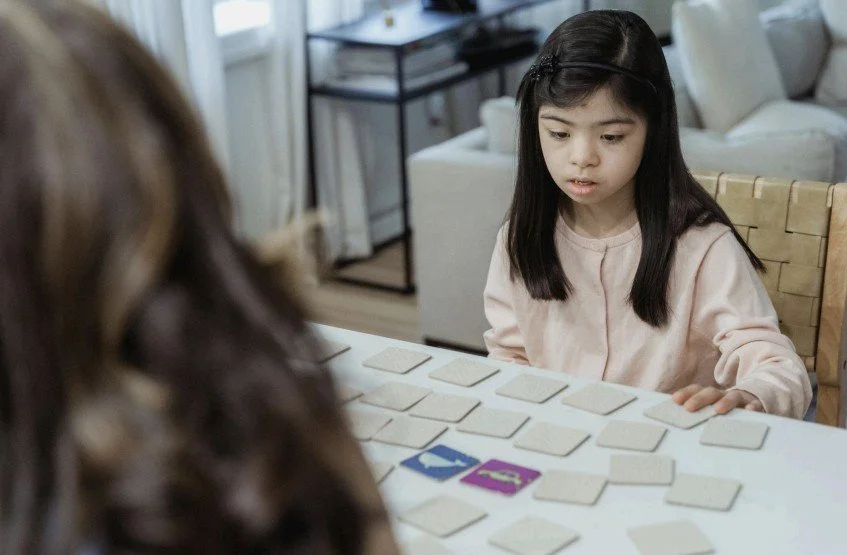
There is a classroom teacher in addition to two of us paras maintaining the classroom. Our daily routine consists of getting the kids inside from their transportation, having breakfast and recess, completing about two hours of daily learning worksheets, then finishing the day with lunch and putting them back on their transportation home. Routine was a very strong foundation in helping our day run smoothly. There is nearly a one-adult-to-three-kids ratio within our day, which may sound like a strong ratio, but I learned it is needed.
What parts of psychology did I find most prominent in this internship? Communication and critical thinking. I always thought fairly highly of myself in these two areas, but I was clearly limiting myself to a selective group of people. I’ve never worked with school-age kids before; of course there’s a difference in how you need to communicate and use critical thinking skills. My twenty-one-year-old brain is very different from an eight-year-old’s. I was learning things every day from my new setting; neither the children nor I need to be sitting in front of a teacher to learn new things. Different experiences, people, and settings are constantly enriching our brains.
To understand the brain, we have to study it. Of course, we can make assumptions about why we do things the way we do, but for facts, we need scientific studies. In a study by Public Health Reports on the brain and child development, it is stated, “At infancy and adulthood, synaptic densities are approximately the same, but our sensory, motor, and memory skills are obviously much more highly developed in early adulthood than in infancy” (Bruer, 1998). From learning about the brain in my psychology courses, I understand that synaptic density refers to the number of neural connections throughout the brain. More and stronger connections allow for more communication throughout the brain, which in turn relates to critical thinking. I prided myself on good use of critical thinking because, when I was constantly working with people close to my age, we had similar amounts of learning and common environments we shared. Being placed in this new setting of an elementary classroom is exactly what I didn’t know I needed.
When the kids would argue about whose toy it was, who was using what item first, and why one person should give another person an object, it all seemed like such a simple fix in my head. These are all things I've experienced before, while they’re still learning to interact with one another. When the children became frustrated with their daily worksheets—which often consisted of practicing money, addition and subtraction, reading comprehension, and telling time—it was easy for me to say, “Just focus and you’ll get it.” Learning new things can be hard, and their attention spans are much shorter than an adult’s. Of course, if I focus I can do simple addition, but this is something for which they are still forming strong neural synapses. Taking this internship reminded me how differently our brains work at different ages and why it’s important to be open to new settings. I requested to work with teenagers, but if I hadn’t had the opportunity to work with eight-year-olds, then I wouldn’t have the experience I do now.
My short fifty hours of paraeducator work taught me a lot about how to work with younger kids, but also about myself. It reminded me how important it is to continue exposing yourself to new situations and unfamiliar waters. Moving forward, I hope you challenge yourself to do the same. I know this matches what I expect for myself in a career because I find it extremely important and rewarding to be in an environment where you’re helping people. I think the school setting is right for me moving forward because you’re helping kids and also the future generations to come—and what’s more important than the future? I also think it’s important to find passion in what you do, because if you love your job, it doesn’t have to feel like draining work. If fifty hours can teach me this much, I have a lot more to learn in my future career.
References
Bruer, J. T. (1998). The brain and child development: Time for some critical thinking. Public Health Reports, 113(5), 388–397. https://pmc.ncbi.nlm.nih.gov/articles/PMC1308409/