Parenting Styles and Their Impact on Children’s Development
By Kaia Martz
Parenting is one of the most important and challenging tasks many of us will face. As a parent, you want to give your child the best chance for success, happiness, and well-being. In fact, many parents’ first words to their newborns are, “I won’t let anything bad happen to you.” Do you think this is something we have control of? Have you ever wondered how the way you parent will impact your child? Parenting styles play a significant role in shaping a child's behavior, emotional health, academic performance, and just may help you to do your best at protecting your child. In this blog, we will explore different types of parenting styles, how they affect children, and why understanding these styles can help parents create a healthier environment for their children to thrive.
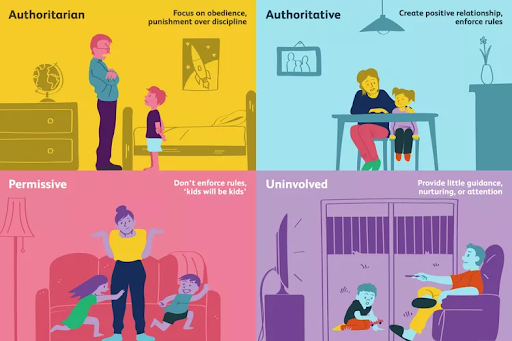
As we move through the four parenting styles, decide if any of them sound like you. Think of these statements: you believe a child does not need to be seen or heard, it’s “your way or the highway” when it comes to rules, and you don’t take your child’s feelings into consideration. If you relate to any of these, you may be an authoritarian parent. “Controlling parents create sneaky kids” seems like the backbone for this style as these children are often well-behaved at home but may rebel with friends (Pardee, 2025). Besides rebelling, this style comes with detrimental effects like low self-esteem, anger management, resentfulness, hostility, and aggression.
Authoritative parenting may have a similar name, but it is a complete opposite style. Whether it be academics, social relationships, or emotional regulation, this style emphasizes a balance of discipline and support which gives children the tools they need to make good decisions and manage emotions. Picture a child who expresses their emotions, communicates with their parents before risky behavior, and are able to resolve conflicts on their own. Sounds like a dream doesn’t it? This is what an authoritative parent provides.
Parents are not your friends! While peers help shape the child’s personality, parents have a critical role in setting the boundaries, morals, and being the “angel or devil” on your shoulder. Permissive parenting may sound appealing because of the freedom, but it comes with many drawbacks. Joseph and John (2008), additionally found through research that these parents lack parental control and the children of these parents are very immature. They possess non-achieving behavior and are very dependent on adults. These children are getting set up for failure in their adult life, don’t be a permissive parent.
Out of all the styles, research has shown that neglectful and uninvolved parenting has the worst developmental outcomes (Joseph & John, 2008). Parents who are distant and disengaged from their children fail to provide the love, guidance, and attention their child needs. As a result, these children are more likely to suffer emotionally and physically. These parents expect children to raise themselves and devote no time to them (Pardee, 2025). There is no handbook to life as we all know, so imagine trying to learn how to adult…as a child.

More recently, the idea of gentle parenting has been put to use. Although this has not been integrated officially into the above four parenting styles, it seems to be a growing movement. There is no exact definition of what gentle parenting is, but from research, many described it as parents regulating their own emotions, helping kids identify and manage their emotions, and a strong emphasis on physical and emotional affection (Pezalla & Davidson, 2024). There are many different opinions related to gentle parenting, some believing that it is completely ridiculous and kids need to face certain consequences, while others believe it’s amazing and a great way to move past the traditional hierarchal parenting. What do you think about gentle parenting?
Understanding the impact of different parenting styles can help parents make informed decisions about how they want to raise their children. No parent is perfect, but there are steps parents can take to ensure a healthy balanced relationship. It is important to note that children are resilient and can thrive in different environments. But equipping our children with the tools needed to help our child feel safe, heard, and confident, is important no matter how resilient the kid is. Parenting is a journey, and it is not always easy. Whether you’re an authoritative, permissive, authoritarian, or neglectful parent, there’s always room for growth. Because we all know we can’t protect our little ones forever, but knowing the best way to parent can eliminate the struggles to come.
References
Joseph, M. V., & John, J. (2008). Impact of parenting styles on child development. Global Academic Society Journal: Social Science Insight, 1(5), 16-25.
Pardee, L. (2025, January 7). What is your parenting style, and why does it matter? Parents. https://www.parents.com/parenting/better-parenting/style/parenting-styles-explained/
Pezalla, A., & Davidson, A. (2024, October 16). Psychology professor’s research offers first look at popular ‘gentle parenting’ movement. Macalester College. https://www.macalester.edu/news/2024/10/psychology-professors-research-offers-first-look-at-popular-gentle-parenting-movement/