Should You Develop An Opinion First?
By Abdiaziz Ali
Have you ever read a story or news about a person who was wrongly arrested because they had a similar color tone or were in the same environment as the perpetrator? I had a similar experience, or well- my friend had the same experience. One of my friends hates the police, although, for various reasons, one of them is that they are quick to judge. In his defense, he once got arrested simply because he resembled the description of the perpetrator. In the police report, Bob (let's call him Bob for now) had the same shoes, hoodie, and clothing style as the perpetrator. He was also in the vicinity where the crime took place. Talk about bad luck. For a little run-down, the crime committed was robbery and it took place where Bob was shopping in the late evening, so it was hard to distinguish between who was who. When the police arrived, they asked the shopkeepers about the features, faces, and names of everyone they knew at the time of the crime. Long story short, more than half of the features the shopkeeper presented matched Bob’s, who left the shop a few minutes earlier, before the crime. Since Bob was the only lead they had, he was interviewed and investigated. It was a long and excruciating process that Bob had to endure.
Confirmation Bias
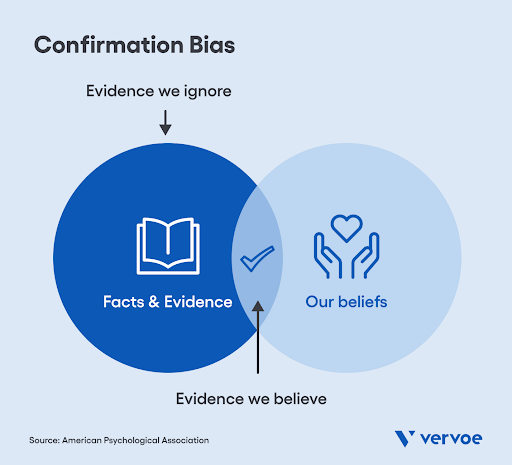
If you heard a similar story, have you considered how the police could make such errors? You would think the police would be thorough with their investigation as they follow strict protocols. But no, this is something even they are susceptible to, called confirmation bias. As humans, it is something we are all susceptible to. Confirmation bias is the tendency to support beliefs by seeking consistent evidence while minimizing inconsistent evidence. Everyone experiences some degree of confirmation bias, whether they are conscious of it or not. Human decision-making and information processing are limited to interpreting information from their viewpoint within quick processes, as this not only helps mitigate time-consuming searches but also protects them from harm. However, one of the first causes of confirmation bias is developing an opinion about something before doing extensive research. Because when one develops an opinion about an issue first, it becomes almost impossible to become rational about it. As such, this was the case for the police in Bob's story.
Harm of Developing an Opinion First
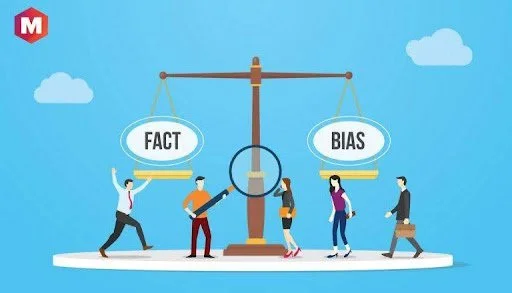
Developing an opinion first is one of the first causes of confirmation bias in criminal investigations. The research conducted by O’Brien (2009) examined factors that influence confirmation bias in criminal investigations. They tested whether expressing an opinion about a suspect’s guilt first guided participants to show bias on those tasks. The study had two groups; one group expressed their opinions first while viewing the police file documents, while others did not develop any opinions first. The results showed participants who expressed an opinion first showed confirmation bias. Any new information added to the case only strengthened what the first group believed. Every progress made in the case further strengthened the opinions of the first group, creating confirmation bias. Another study conducted by Rassin et al. (2010) also found that evidence was evaluated more strongly when it followed another piece of evidence that pointed in the same direction, even if the follow-up was wrong. In Bob's story, he was arrested because he was in the unfortunate time of grocery shopping, having the wrong features as the perpetrator, and being in the wrong vicinity at the happening of the crime. And since he was the only lead the police had and all evidence pointed to him, they must have decided that Bob was the perpetrator, and as forming an opinion first creates confirmation bias, the police investigators were confirmed in bias, whether conscious or unconscious; otherwise, they would have figured that Bob was with his family at the time of the crime as he lived only a 5-minute drive from the shop.
Conclusion
False convictions are mostly not deliberate misconduct. It is an honest mistake by ethical investigators and prosecutors who want to solve a case. These investigators probably wanted to capture the right person, but something led them astray. Understanding how these criminal investigators go astray and what led them to the wrong conclusions helps avoid developing the same mistake. So, for this to be possible, we must watch out for the subtle psychological processes that can lead investigators to the wrong conclusion. One of the features is the tendency to maintain an opinion by seeking consistent evidence while minimizing conflicting evidence. Because at some point in every case, investigators must form a theory about what happened and who was involved. The investigation then shifts from figuring out what happened to proving it. However, they start to form confirmation bias once they call a suspect because they have, to a degree, committed to a theory, even if the investigation continues. As a result, in criminal investigations, forming an opinion first could vandalize accuracy by leading investigators to ignore evidence that challenges their theory of a case.
References
O’Brien, B. (2009). Prime suspect: An examination of factors that aggravate and counteract confirmation bias in criminal investigation. Psychology, Public Policy, and Law, 15(4), 315–334. https://doi.org/10.1037/a0017881
Rassin, E., Eerland, A., & Kuijpers, I. (2010). Let’s find the evidence: An analogue study of confirmation bias in criminal investigations. Journal of Investigative Psychology and Offender Profiling, 7(3), 231–246. https://doi.org/10.1002/jip.126