Procrastinating: The Urge of Wanting to Focus but Feeling Stuck
By Jaylene Perez
Have you ever gotten a due date for a big exam and thought, “I could start next week or the week after?” Next thing you know, it's the night before the exam and the only option you have is to cram all the knowledge you can fit in your brain and hope it is good enough to pass the test. This is called procrastination. As a college student, it is difficult to not procrastinate until the last minute, just to get the never-ending feeling of being overwhelmed and unmotivated all at once by all the work you put off. This blog will hopefully help you learn some tips or skills to break this never-ending cycle of procrastination once and for all.
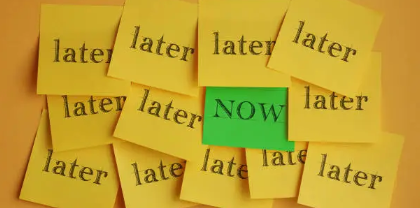
What truly is the meaning of procrastination though? Everyone puts things off sometimes, but procrastinators chronically avoid difficult tasks and may deliberately look for distractions. Procrastination tends to reflect a person’s struggles with self-control (Psychology Today, 2025). However, it can be a difficult concept to grasp because it is best known for delaying things to the last minute. But it can be more than that. Procrastination can be hopeless or anxious because you have the urge to do the assignment, but feel like you can’t even though you know you have to. It can become this never-ending cycle of wanting to accomplish something and feeling guilty for not getting it done sooner.
The most common solution for procrastination is to eliminate distractions, but for many people that’s not always the case. The mind tends to wander frequently with thoughts like "What is the weather tomorrow? Why is a tomato a fruit? What should I eat for breakfast?” And so on. Thinking about so many things causes a barrier to fully performing when it comes to getting off the hamster wheel. The management of academic stress is critical in educational interventions aimed at reducing academic procrastination among students (Liu & Li, 2024). Attention span seems to decrease more often with today's technology. A solution for procrastination isn’t just black and white. There can be many factors that come into play but with lots of effort and determination, it can be done.

So, what can truly be done to avoid the regret you feel when it’s 11:00 pm, and you’re feeling helpless cramming through articles and notes trying to get a paper you’ve known about for weeks wishing you could have just started a few days in advance? There are some time management techniques that are well suited to overcoming procrastination and others that can make it worse. Those who reduce anxiety and fear and emphasize the satisfaction and rewards of completing tasks work best. Those that are inflexible, emphasize the magnitude of tasks, and increase anxiety can actually increase procrastination and are thus counter-productive. (Voge, 2007). So instead of trying to write down every single task you need to do, try breaking it down into categories or due dates such as school, personal, or cleaning-related tasks to give you more flexibility throughout the week. So, instead of seeing an overwhelming list in front of you, it can be broken up into smaller lists per day to not overwhelm yourself. Another thing that will help procrastinating decrease is a reward system. Something as easy as going to get a sweet treat after finishing an assignment off your to-do list can fuel some motivation and help you complete your task if you see a fun outcome by the end of it.
These are only a couple of the many ways that procrastination can get squashed once and for all. So next time you are bringing yourself down for avoiding your assignment until the moment before it’s due, take it easy on yourself. Procrastination isn’t a click of a button it takes time for the routine to set in motion but just remember the satisfying feeling of pressing submit on that assignment and being done.
References
Liu, Q., & Li, J. (2024). A one-year longitudinal study on the mediating role of problematic TikTok use and gender differences in the association between academic stress and academic procrastination. Humanities & Social Sciences Communications, 11(1), 1132. https://doi.org/10.1057/s41599-024-03654-6
Tartakovsky, M. (2025). Procrastination. Psychology Today. https://www.psychologytoday.com/us/basics/procrastination
Voge, D. J. (2007). Understanding and overcoming procrastination. McGraw Center for Teaching and Learning. https://mcgraw.princeton.edu/undergraduates/resources/resource-library/understanding-and-overcoming-procrastination