Pair Bonds, what are They?
By Sydney Weulander
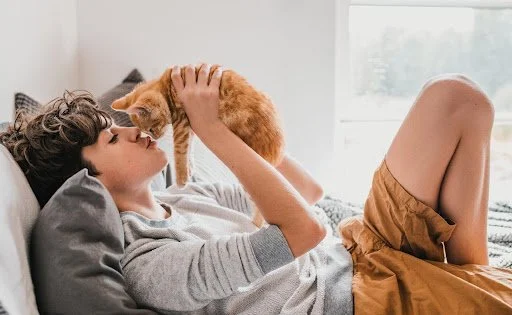
Imagine you are sitting on your couch at home and your cat is sitting in your lap purring because you are petting them. Even though your cat says nothing, you know that they love you. Another situation is when you see a friend or family member and hug them. There is a comforting warmth or influx of happiness when you are near them or when you hug them. Why? Well, it is the start or cause of a pair bond.
What is a Pair Bond?
Williams and Cymerblit-Sabba (2016) explained how “Pair bonding refers to the ability to form a selective continuing relationship between two individuals” (para. 1). A pair bond can be formed with family members, friends, significant others, and other relationships. It establishes a mutual bond through oxytocin, known as the love hormone; vasopressin, the male love hormone; and dopamine, known to the public as the “feel-good” neurotransmitter.
A simple pair bond starts when two people, or a person and an animal, form a connection. It can be from an activity that would induce any of the hormones or transmitters mentioned previously. An example of this would be physical touch as hugs release the love hormone oxytocin which starts the formation of a bond.
Fundamentals to Forming a Pair Bond
The fundamental start of a pair bond begins with the release of either oxytocin, vasopressin, or dopamine. What are the purposes of hormones and neurotransmitters influence on a strong bond?
Neurotransmitters are chemical messengers that transmit signals between neurons in the brain. Dopamine is a neurotransmitter with vital roles within the reward system, attention, movement, and mood. When looking into how connections are made between others it holds an important step because of the reward system that dopamine is connected too makes an action pleasurable. Humans are driven by pleasure if an action is not enjoyable in some form it is likely the action would not be done. For example, if petting a cat or pet was not enjoyable the chances of anyone doing it would be low. Since that action is feel-good dopamine is activated within the brain.
Hormones are chemical messengers responsible for sending signals across the body. They help regulate growth, development, metabolism, reproduction, homeostasis (bodies internal balance), sleep-wake cycle, stress response, mood, and behavior. With that in mind oxytocin the “love hormone” and vasopressin the "male love hormone” are integral hormones to forming a pair bond. Yet, there is a difference in which hormone is considered more important to females and males.
Pair Bonds in Females
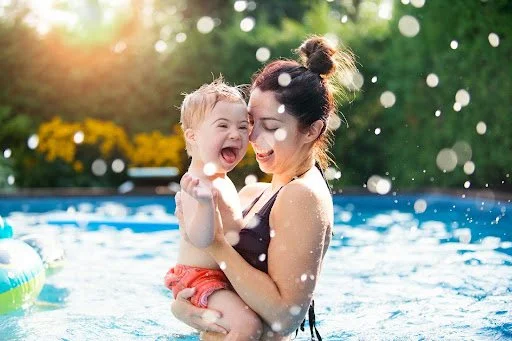
It may sound surprising, but forming a pair bond for women works differently than it does for men. When it comes to females biologically, they are built differently and inherently they are coded to eventually reproduce. A pair bond is fundamental to a healthy parent child relationship containing a significant role in connecting with their baby. Mentioned by Santos-Longhurst (2023) about oxytocin “In females, the hormone triggers labor and the release of breastmilk.” With the hormone oxytocin as the woman's main source of composing attachments as shown with the special relationship a mother has with their child. This evokes similarly in other attachments romantic or platonic. As their love hormones activate parts of the brain that signal a reward system that helps regulate mood correlating with dopamine. The release of the hormone happens with birth, sexual activities, and social bonding such as hugging and cuddling. Intentionally pair bonds when discussed are mostly brought up in a sexual light. They are heavily influential on romantic relationships but have non-sexual benefits.
Pair Bonds in Males
Males develop relationships differently than their counterparts. Their main hormone is vasopressin, which is known as the male love hormone functions to regulate blood pressure, blood volume, and urine output. Brought forth by Sherman (2024) “Oxytocin acting within the brain is essential for mother-infant bonding, pair bonding, empathy and sexual behavior in females; whereas vasopressin acting centrally reinforces territorial aggression, mate guarding and pair bonding in males.” As vasopressin induces a mate guarding it only makes sense that it helps them fall in love and form relationships romantic and platonic. Even with vasopressin as their main hormone oxytocin does still play a role in non-sexual partnerships.
Conclusion
Now you know why you felt that warm feeling when your cat purred while sitting on your lap. It’s not some mystery or magic; it’s just the science of pair bonds.
References
Santos-Longhurst, A. (2023). Is there really A “love hormone”? Healthline. https://www.healthline.com/health/love-hormone
Sherman, T. (2024). The neuroscience of love: What’s going on in the lovestruck brain? Georgetown University. https://www.georgetown.edu/news/the-neuroscience-of-love-whats-going-on-in-the-lovestruck-brain/
Pfaff, D. W., & Joëls, M. (Eds.). (2016). Hormones, brain and behavior. Elsevier Academic Press.
Williams Avram, S. K., & Cymerblit-Sabba, A. (2016). 3.14 - Vasopressin: Roles in modulating social behaviors. In D. W. Pfaff & M. Joëls (Eds.), Hormones, brain and behavior (Vol. 3). Academic Press. https://www.sciencedirect.com/science/article/abs/pii/B9780128035924000572